jasonnewland.com This is "Stop Puffing & Start Living – Stop Smoking Now!!" (with background music). It is also available as either a video or an audio MP3 download (www.jasonnewland.com). This "Stop Smoking" Hypnosis Session is produced by hypnotist Jason Newland. Watch or Listen to this session at least twice a day for that a week. (Twice if possible) & see how you feel. Use for as long as you need. If you benefit from this free hypnosis session, please tell others. There are hundreds of free hypnosis videos & audios at http Background music: Kevin MacLeod (incompetech.com) Licensed under Creative Commons creativecommons.org Subscribe = www.youtube.com Join me on Facebook = www.facebook.com Join me on Twitter = twitter.com
Tag Archives: Nicotine
Nicorette 15mg Nicotine Patch – Step 1- box of 7 patches.

Full Strength Nicorette Patch contains nicotine which is absorbed through the skin when the patch is applied. This should help to relieve the symptoms of nicotine withdrawal when you stop smoking. Do not smoke during your Nicorette Patch programme.
Sale Price:£9.99

[amazon-product-reviews]
Vie Patch – NO NICOTINE QUIT SMOKING Patches – 30 Patches. 100% Natural. 1 Month Supply

How it works: The Vie Patch uses Trans-Dermal technology to deliver the natural active ingredients into the bloodstream through the skin (bypassing the stomach)
Additional Information: The Vie No Nicotine Quit Smoking Patch has the same laudable
Sale Price:£15.96
[amazon-product-reviews]
Nicotine Patches Fail Most Pregnant Smokers
HomeNewsNicotine Patches Fail Most Pregnant Smokers
March 1, 2012 Nicotine replacement therapy is widely used to help smokers kick the habit, but new research published in the New England Journal of Medicine raises major doubts about its effectiveness during pregnancy. The largest clinical trial ever to examine the use of nicotine patches in this setting found little evidence that treatment helps pregnant women stop smoking. Adherence to therapy was very low, with fewer than 1 in 10 women still wearing the patches after one month. Most women who smoke are highly motivated to stop when they become pregnant, but many are not successful. Researcher Tim Coleman, MD, of the University of Nottingham in the United Kingdom, says it is clear that standard-dose nicotine replacement therapy is not a useful strategy for helping them achieve their goal. And at this point, it’s not clear if nicotine replacement is totally safe for pregnant women. “These women had high-quality behavioral support, yet most of them only stayed on the treatment for two to four weeks,” Coleman says. “This suggests that either they did not trust that the treatment was safe for their babies or that it wasn’t working for them.”
For More Information:
http://www.webmd.com/smoking-cessation/news/20120229/nicotine-patches-fail-most-pregnant-smokers
Report: Tobacco Companies and Convenience Stores Partner to Market Tobacco Products
Read the full story Mar 06, 2012
Obama Administration Appeals Ruling on Tobacco Graphic Warning Labels
Read the full story Mar 06, 2012
Study: Broad Anti-Smoking Vaccination Not Worth the Cost
Read the full story Mar 05, 2012
Smokeless Tobacco Use By Miami Teens Up 69 Percent: Study
Read the full story
Complete the form below to subscribe to the ActionToQuit listserv. Join the conversation about tobacco control policy and receive weekly updates.
Subscribe to the RSS feed to get notification of key dates.Nicotinell Regular Strength Nicotine Gum Fruit Flavour 96 pieces
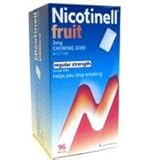
Nicotinell fruit flavour gum provides an effective aid to combat the unpleasant withdrawal symptoms caused by giving up smoking. Nicotinell 2mg gum is particularly useful when severe withdrawal symptoms are experienced. Do not exceed the stated dose.
Sale Price:£9.95
[amazon-product-reviews]
10 X Herbal Cigarette Holder Cig Filter Tips Reduce Tar, Nicotine, Carbon.

Herb micro filter contains extracts more than 10 medicinal plants including licorice, madder, primrose and others to help make your cigarette tase mild.

Herb extracts and green tea flavonoid remove obnoxious smell in cigarette smoke and retain aroma
Sale Price:£3.49
[amazon-product-reviews]
Many Americans Support Lower Nicotine Levels in Cigarettes
HomeNewsMany Americans Support Lower Nicotine Levels in Cigarettes
February 22, 2012 Most American adults support reducing nicotine in cigarettes to prevent people, especially children, from becoming addicted to smoking, a new study finds. Researchers surveyed 511 nonsmokers and 510 smokers aged 18 and older and found that, overall, two-thirds supported reducing nicotine levels in cigarettes to nonaddictive levels. The study also found that 77 percent (81 percent of nonsmokers and 74 percent of smokers) would support lowering the amount of nicotine in cigarettes to nonaddictive levels if doing so would reduce the number of children who became addicted to cigarettes.
For More Information:
http://health.usnews.com/health-news/news/articles/2012/02/20/many-americans-support-lower-nicotine-levels-in-cigarettes
Consumers Switching Between Tobacco Types
Read the full story Feb 24, 2012
Daytona Speedway to Ban Smoking
Read the full story Feb 23, 2012
More Troops on Smokeless Tobacco After Deployment
Read the full story Feb 23, 2012
Physicians Lack Confidence in Their Ability to Counsel Cancer Patients to Quit Smoking
Read the full story
Complete the form below to subscribe to the ActionToQuit listserv. Join the conversation about tobacco control policy and receive weekly updates.
Subscribe to the RSS feed to get notification of key dates.What Is Nicotine?
Editor’s Choice
Main Category: Smoking / Quit Smoking
Also Included In: Alcohol / Addiction / Illegal Drugs
Article Date: 26 Jan 2012 – 0:00 PST
14 Feb. 2012. APA
posted by Electricman on 26 Jan 2012 at 2:31 pm
Main Category: Smoking / Quit Smoking
Also Included In: Alcohol / Addiction / Illegal Drugs
Article Date: 26 Jan 2012 – 0:00 PST
 email to a friend
  printer friendly
  opinions

Nicotine is a nitrogen-containing chemical – an alkaloid, which is made by several types of plants, including the tobacco plant. Nicotine is also produced synthetically. Nicotiana tabacum, the type of nicotine found in tobacco plants, comes from the nightshade family. Red peppers, eggplant, tomatoes and potatoes are examples of the nightshade family.
Apart from being a substance found in tobacco products, nicotine is also an antiherbivore chemical, specifically for the elimination of insects – it used to be extensively used as an insecticide.
Pharmacologic effects – when humans, mammals and most other types of animals are exposed to nicotine, it increases their heart rate, heart muscle oxygen consumption rate, and heart stroke volume – these are known as pharmacologic effects.
Psychodynamic effects – the consumption of nicotine is also linked to raised alertness, euphoria, and a sensation of being relaxed.
Addictive properties – nicotine is highly addictive. People who regularly consume nicotine and then suddenly stop experience withdrawal symptoms, which may include cravings, a sense of emptiness, anxiety, depression, moodiness, irritability, and inattentiveness. The American Heart Association says that nicotine (from smoking tobacco) is one of the hardest substances to quit – at least as hard as heroin.
According to a report published by the Massachusetts Dept of Public Health, tobacco companies steadily increased the nicotine content of their cigarettes from 1998 to 2004, by approximately 10%. The higher the nicotine dose in each cigarette, the harder it is for the regular smoker to quit. The Department accused the tobacco companies of deliberately making their customers more addicted, so that they could secure sales. Doctors complain that this business strategy undermines the success rates of smoking cessation therapies.Link to article
According to Medilexicon’s medical dictionary:
Nicotine is “A poisonous volatile alkaloid derived from tobacco (Nicotiana spp.) and responsible for many of the effects of tobacco; it first stimulates (small doses), then depresses (large doses) at autonomic ganglia and myoneural junctions. Its principal urinary metabolite is cotinine.Nicotine is an important tool in physiologic and pharmacologic investigation, is used as an insecticide and fumigant, and forms salts with most acids.”
Another study carried out at the National Institute on Drug Abuse found that nicotine consumption makes cocaine more addictive. (Link to article)
Nicotine’s molecular formula is C10H14N2.
The French ambassador in Portugal, Jean Nicot de Villemain, sent tobacco and seeds to Paris from Brazil in 1560, saying that tobacco had medicinal uses. From his name came the Latin name for the tobacco plant – Nicotianana tabacum.Nicot sent snuff – powdered tobacco that is sniffed through the nostril – to Catherine de Medici, the Queen of France at the time. He said it would treat her migraines. Nicot, who suffered from headaches, said the snuff helped relieve symptoms. The Queen tried it and said it was effective. She said that tobacco should be called the Herba Regina (the herb of the queen).
In 1828, Wilhelm Heinrich Posselt, a doctor, and Karl Ludwig Reinmann, a chemist, both from Germany, first isolated nicotine from the tobacco plant. They said it was a poison.
Louise Melsens, a Belgian chemist and physicist, described nicotine’s empirical formula in 1843, and Adolf Pinner and Richard Wolffenstein, both chemists from Germany, described its structure in 1893.
In 1904, nicotine was first synthesized by A. Pictet and P. Crepieux.

After inhaling tobacco smoke, nicotine rapidly enters the bloodstream, crosses the blood-brain barrier and is inside the brain within eight to twenty seconds. Within approximately two hours after entering the body, half of the nicotine has gone (elimination half-life of about two hours).
How much nicotine may enter a smoker’s body depends on: what type of tobacco is being usedwhether or not the smoker inhales the smokewhether a filter is used, and what type of filter it isTobacco products that are chewed, placed inside the mouth, or snorted tend to release considerably larger amounts of nicotine into the body than smoking.
Nicotine is broken down (metabolized) in the liver, mostly by cytochrome P450 enzymes. Cotinine is the main metabolite.
Nicotine is both a sedative and a stimulant. When our bodies are exposed to nicotine, we experience a “kick”- this is partly caused by nicotine’s stimulation of the adrenal glands, resulting in the release of adrenaline (apinephrine). This surge of adrenaline stimulates the body, there is an immediate release of glucose, as well as an increase in heart rate, respiration and blood pressure.Nicotine also makes the pancreas produce less insulin, resulting in slight hyperglycemia (high blood sugar or glucose).
Indirectly, nicotine causes dopamine to be released in the pleasure and motivation areas of the brain. A similar effect occurs when people take heroin or cocaine. The drug user experiences pleasure. Dopamine is a brain chemical that affects emotions, movements, and sensations of pleasure and pain. Dopamine neurotransmitters are located in the substantia nigra, deep in the middle of the brain. Put simply, if your brain dopamine levels rise, your sensation of contentment is higher.
Depending on the nicotine dose taken and the individual’s nervous system arousal, nicotine can also act as a sedative.
Tolerance – the more nicotine we have, the higher our tolerance becomes, and we require higher doses to enjoy the same initial effects. As most of the nicotine in the body is gone during sleep, tolerance may have virtually disappeared first thing in the morning. That is why many smokers say their first cigarette of the day is the best, or strongest. As the day develops, nicotine has less of an effect, because of tolerance build-up.
Concentration and memory – studies have shown that nicotine appears to improve memory and concentration. Experts say that this is due to an increase in acetylcholine and norepinephrine. Norepinephrine also increases the sensation of wakefulness (arousal).
Reduced anxiety – nicotine results in increased levels of beta-endorphin, which reduces anxiety.
Humans get their nicotine “fix” primarily through smoking tobacco, but can also obtain it by snorting snuff, chewing tobacco, or taking NRTs (nicotine replacement therapies), such as nicotine gum, lozenges, patches and inhalators.By far, the most popular way of consuming nicotine is by smoking cigarettes. Worldwide, over one billion people are regular tobacco smokers, according to WHO (World Health Organization).
Smoking in the USA – Approximately 23% of adult males and 18% of adult females in the USA are smokers. Over 400,000 thousand premature deaths in the country are caused by cigarette companies, nearly 20% of all deaths. More people die as a result of smoking than all the deaths due to HIV, vehicle accidents, murders, suicides, alcohol abuse and drug abuse combined.
Smoking in the UK – approximately 24% of the UK adult population are smokers, according to the NHS (National Health Service) – 25% of males and 23% of females. 114,000 smokers die prematurely in the UK every year.
The NHS, UK, says that about 70% of all British smokers would like to quit, but believe they cannot. Half of all smokers in the country eventually manage to give up successfully.
Cigarette smoking originates from the European exploration and colonization of the Americas, where tobacco was common. Smoking tobacco soon became popular in Europe, and then spread to the rest of the world.
Further reading:
– What Is Nicotine Dependence? What Are The Dangers Of Smoking?
– Seven Great Tips to Help Quit Smoking
– Myths And Truths About Therapeutic Nicotine
– Nicotine Patches, Gum, Don’t Help Smokers Quit Long-Term, New Study
– Many mistakenly think nicotine causes cancer, rather than the smoke
Written by Christian Nordqvist
Copyright: Medical News Today
Not to be reproduced without permission of Medical News Today
MLA
14 Feb. 2012.
Please note: If no author information is provided, the source is cited instead.
posted by Electricman on 26 Jan 2012 at 2:31 pm
Don’t belive the “harm reduction ” sites that would like you to believe their lies and misinformation that you can stay addicted forever
Nicotine -one of the most toxic and addicting of all drugs and it is toxic by all routes of exposure including the intact skin. ….also used as a contact insecticidal.
Which of the following poisons is the most deadly?
1. Arsenic
2. Strychnine
3. Nicotine
If you guessed # 3, you are correct. The lethal dosage for a 150 pound adult is 60 mg. The lethal dosage for # 2 is 75 mg and the lethal dosage for # 1 is 200 mg. In other words, nicotine is three times as toxic as arsenic and one and one half times as toxic as strychnine.
| post followup | alert a moderator |
Please note that we publish your name, but we do not publish your email address. It is only used to let you know when your message is published. We do not use it for any other purpose. Please see our privacy policy for more information.
If you write about specific medications or operations, please do not name health care professionals by name.
All opinions are moderated before being included (to stop spam)
Contact Our News Editors
For any corrections of factual information, or to contact the editors please use our feedback form.
Please send any medical news or health news press releases to:
Note: Any medical information published on this website is not intended as a substitute for informed medical advice and you should not take any action before consulting with a health care professional. For more information, please read our terms and conditions.